The Man Who Invented Outdoor Cinema in His Own Driveway
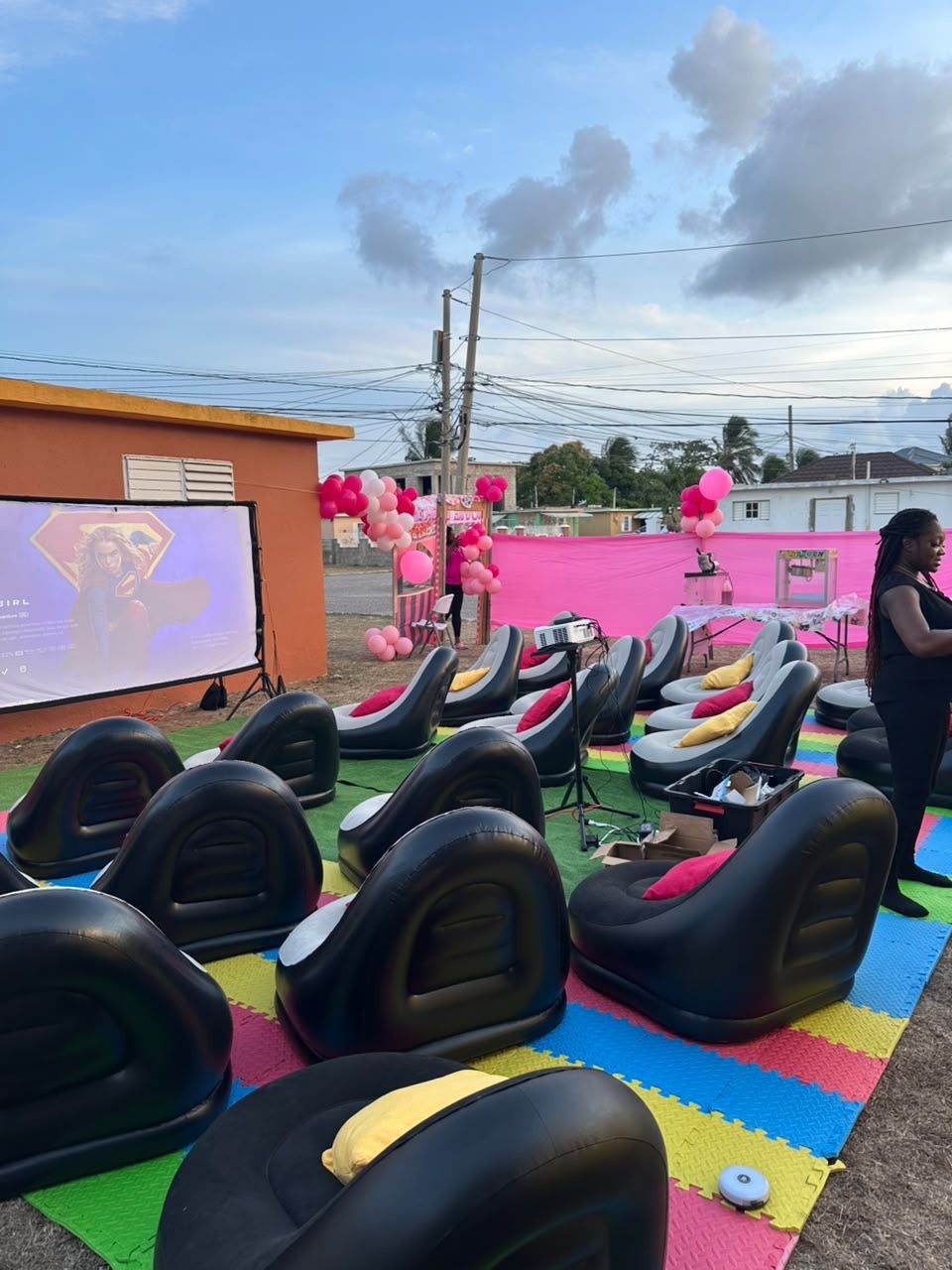
Every outdoor movie night happening in Jamaica tonight traces back to one man messing about in his driveway in New Jersey in the early 1930s.
The problem he was trying to fix
Richard Hollingshead Jr. sold car products for his father's company in Camden, New Jersey. He also loved films. The story that's followed him ever since is that the idea came from watching his mother struggle to get comfortable in ordinary cinema seats.
True or not, the problem was real enough. Cinemas back then were rigid, cramped places. You sat where you were put, quietly, for the whole thing. Anybody with small children basically couldn't go.
Tested with a projector on a car bonnet
His method was not sophisticated.
He stuck a 1928 Kodak projector on the bonnet of his car. Pinned a screen to some trees in his yard. Put a radio behind the screen for sound.
Then he did the thing that separates people who tinker from people who invent. He tested it properly. He simulated different weather to see how the picture held up. He lined cars up in front of the screen to work out spacing, angles and elevation, so somebody parked at the back could still see past the cars in front.
He got his patent in May 1933.
Opening night
Less than a month later, on 6 June 1933, the world's first drive in opened on Admiral Wilson Boulevard in Pennsauken, Camden. He called it Park-In Theatres. Nobody said "drive in" yet.
The screen was roughly 40 by 50 feet. It cost 25 cents for your car plus 25 cents a head, capped at a dollar for the group. The opening film was a British comedy called Wives Beware, already on its second run.
It sold out.
The problem he couldn't solve
Here's the part that matters most to anybody doing this today.
Hollingshead got RCA Victor to supply three enormous speakers mounted beside the screen. The system was called directional sound and it did not work. Cars at the back could barely hear anything. Neighbours around the lot could hear far too much.
That one flaw, how do you get sound to an outdoor audience without broadcasting it across the whole district, shaped the next ninety years of this format. RCA eventually built small speakers that hooked onto car windows, which is the image most people carry around of a drive in.
It took wireless headphones to actually solve it.
The boom, then the collapse
His original Camden site struggled and shut within a few years. But the patent got overturned in 1949, and after that drive ins spread across America fast. By the fifties and sixties there were thousands. Some were massive. One on Long Island held 2,500 cars and had a playground and a full restaurant.
It travelled too. Canada got its first in 1946. Australia in 1954. Jamaica's Harbour View Drive-In opened in 1963.
Then came television, then multiplexes, then home video, and eventually the land under the drive ins was worth more than the drive ins.
What survived
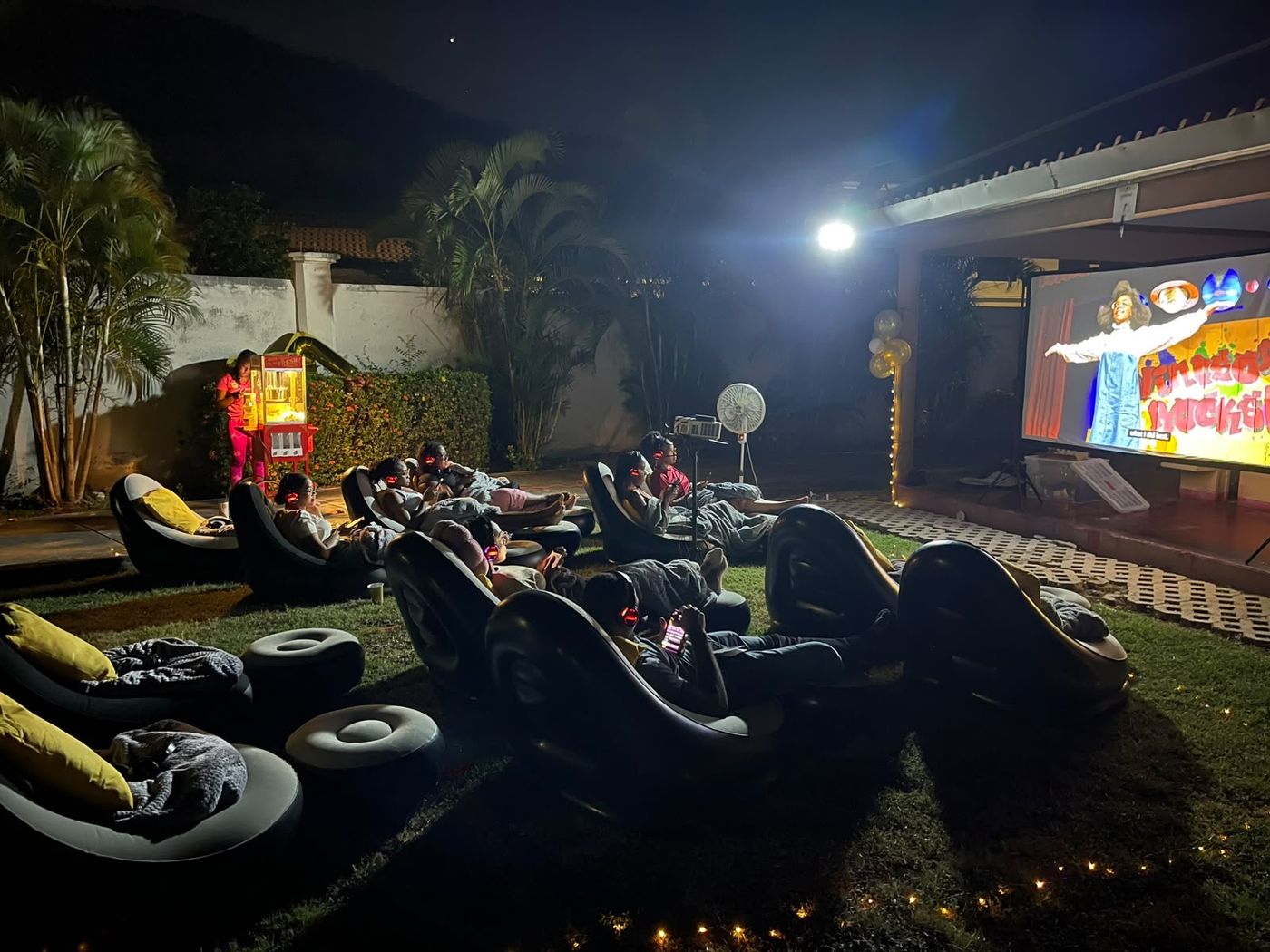
The equipment is unrecognisable now. What survived is the insight.
Hollingshead worked out that people would rather watch something comfortably in the open air than uncomfortably in a sealed room, and that what happens around the film matters more than picture quality.
Ninety odd years later, on a lawn in St. Catherine, with a 4K projector and wireless headphones and not a car in sight, that's still exactly the idea.
Want your own version of it
Here's all we need from you to get started: your date, roughly how many people, and where you are. That's enough for us to send you a written quote with a real number on it, no back and forth, no "call us for pricing."
WhatsApp us: 876-863-2451 Email us: booknow@dinexja.com Or build it yourself: put your event together on our booking page and see the total right away. No form, no obligation.
We set up anywhere in Jamaica.